
Lindsay Clancy Trial- Day 10

Dr. Jennifer Tufts Cross Examination
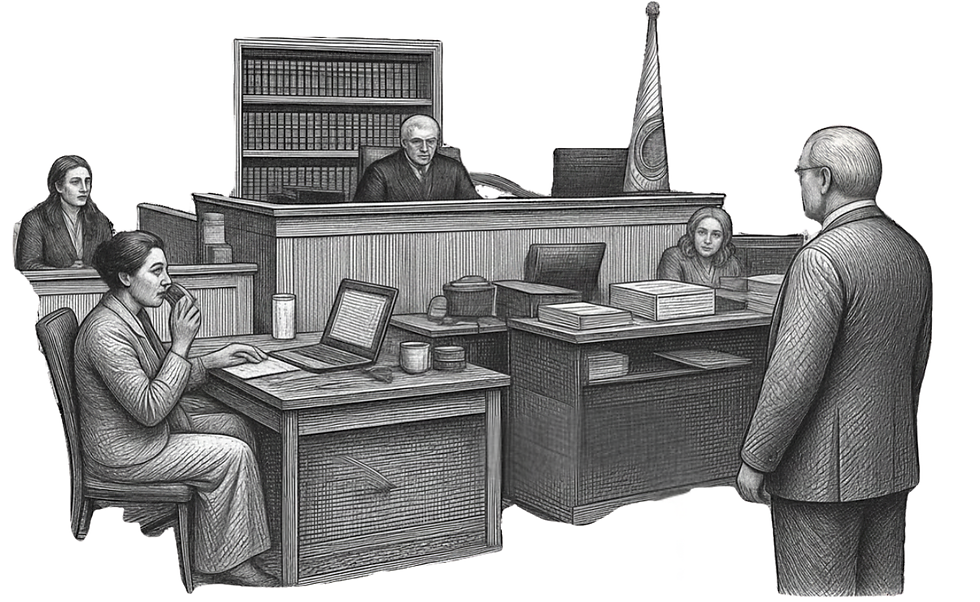
One of Tufts' notes contained language concerning whether Lindsay was:
"hyper" and experiencing pressured speech
Reddington questioned Tufts closely about the wording and punctuation of the note.
The defence attempted to suggest that the documentation could indicate symptoms consistent with a mood disorder.
Tufts disagreed with that interpretation and explained that her notation meant that Lindsay was not hyper or exhibiting pressured speech.
Lindsay wasn't receiving all of her care from one person.
She was seeing multiple providers and having medications prescribed, changed, stopped and restarted.
Reddington questioned whether Tufts knew:
What other medications Lindsay was taking.
What other providers had observed.
What other providers had prescribed.
How serious some of Lindsay's symptoms had become.
Tufts defended her treatment decisions.
She maintained that she was treating Lindsay based upon the information available to her at the time. Which she relied on getting from Lindsay
appointment questions
Many appointments were conducted remotely.
Some lasted approximately 25 minutes.
The defence questioned whether that was enough time to properly evaluate a rapidly deteriorating postpartum patient
documentation
Some notes were relatively brief.
Reddington questioned whether important symptoms were adequately documented.
He challenged Tufts about what she did and didn't record.
The defence argued that the records didn't fully capture Lindsay's deteriorating condition.
Suicide Hotline topic
Lindsay had called a suicide hotline twice.
Tufts testified that she wasn't aware of those calls at the time.
said she was surprised to learn about them during the trial.
Medication Issues
The defence is presenting a picture of:
Symptom → medication → worsening → another medication → another provider → another medication → worsening symptoms.
Tufts, however, maintained that her treatment decisions were based on the symptoms Lindsay reported and the clinical information available to her at the time.
The records shows that Lindsay received more than 30 prescriptions between September 2022 and January 2023, although that does not mean she necessarily took all of them simultaneously.
Opinion Time: this is messy!! A lot of the questions came down to who knew what and who should have told who. Should Lindsay have been trusted to tell everything going on, should the providers asked to see previous records? However the switching of providers wasn't a planned thing but more of a happen stance. As someone with a mental health diagnosis, I will say 25 minute appointments are NOT ENOUGH. Lindsay needed 1 hour appointments weekly minimum. Sadly while it seems Lindsay tried to get help, none of it was really sufficient and things fell through cracks on every level. The amount of medications she was on and off in the time period of Sept 2022-Jan 2023 is reckless and I think would mess with anyones minds. Lastly, the whole concept of she said she had suicidal ideations or thoughts but because she didn't have a plan meant it wasn't taken as serious. Also I don't think any provider should assume any patient is 100% honest especially in stating those thoughts, sometimes people down play it because they are concerned of people not understanding.
Witness #62- Julie Paul- Called By the Prosecution
Psychiatric Nurse Practitioner & Midwife
She explained that there were limited resources for postpartum mental-health treatment in the South Shore area.
Lindsay was referred to Paul by Susan Clancy, Patrick's mother, who worked as a nurse at South Shore Hospital.
Paul was leaving the practice shortly after seeing Lindsay, so their treatment relationship was very brief.
Prescribed her Prozac
After reporting her side effects, Lindsay was told to stop prozac. Also was told to stop the Ativan and Benadryl she was using for sleep and but to use mirtazapine and klonopin as needed.
On November 27th Lindsay reported feeling detached from herself and reality. She was told to stop the klonopin
The following day, Lindsay experienced a panic attack.
Paul advised her to:
Exercise/run.
Continue following up with treatment.
Consider a partial hospitalization program.
Lindsay reportedly felt that a partial hospitalization program would be difficult to manage logistically because of her family and childcare responsibilities.
Paul's treatment of Lindsay lasted only a few days.
Paul testified that she was leaving the practice approximately 10 days after Lindsay's initial assessment.
Lindsay was subsequently seen by Rebecca Jollotta, another psychiatric nurse practitioner.
This becomes extremely important later because the defence argues that Lindsay's treatment became fragmented:
Tufts → Paul → Jollotta → other providers
with medications being prescribed, stopped and changed along the way.


Comments